1
/
of
9
Smoky Hanksite Specimen: UV Reactive Salt Crystal from Searles Lake
No reviews
Regular price
Sale price
$13.50 USD
Unit price
/
per
Shipping calculated at checkout.
Couldn't load pickup availability
Product Description
Product Description
Hanksite Specimen ~
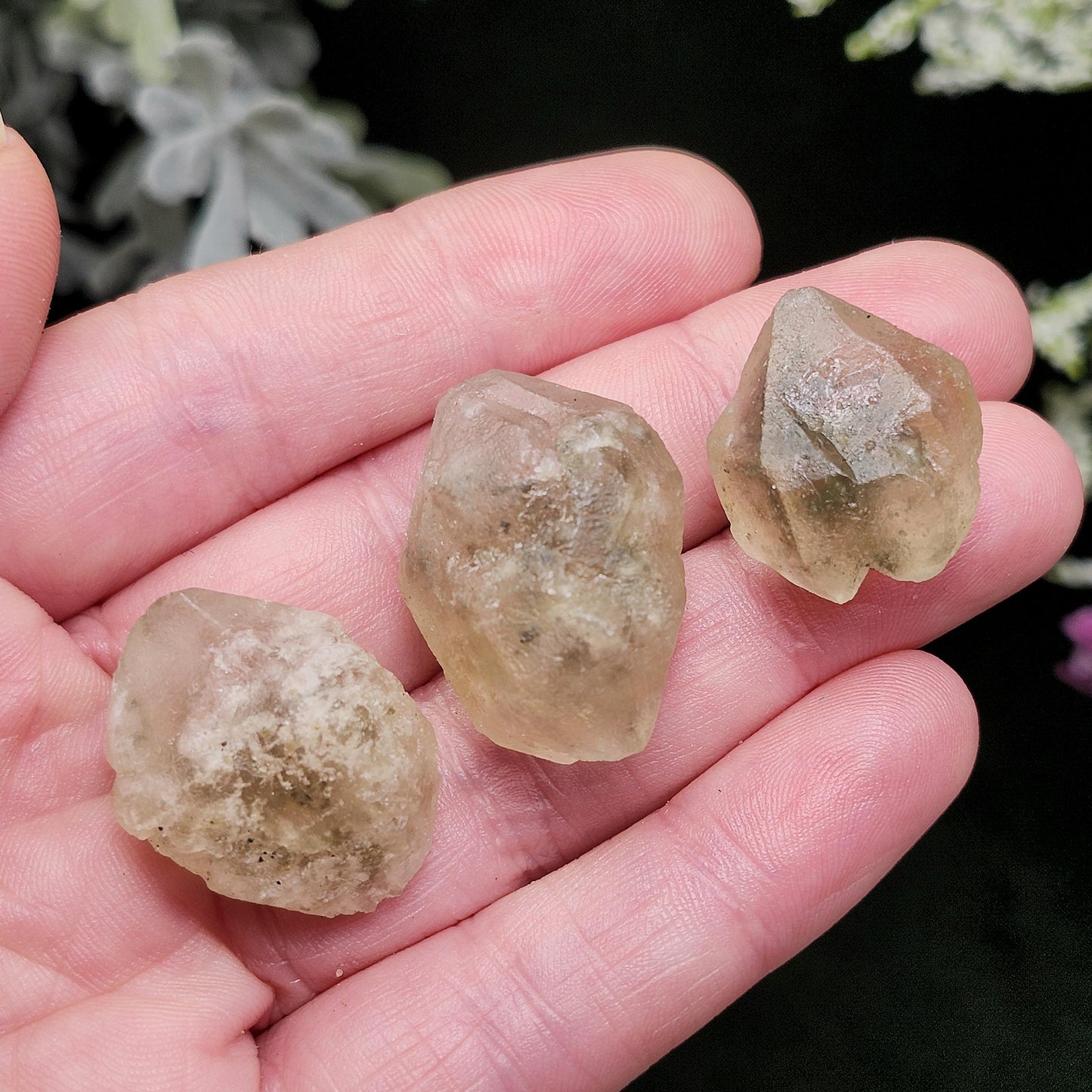
Hanksite is a rare evaporite mineral from California’s Searles Lake region, formed as ancient saline lakes slowly evaporated. These specimens have hexagonal growth, exhibiting single or double terminations, and showcase a smoky glow with a slight green hue. Hanksite is delicate at approximately a 3 on the Mohs scale and is a water-soluble mineral that should be kept dry so that its integrity is not affected. These crystals glow with a soft fluorescence when under a black light - a rare quality in the mineral kingdom!
This listing is for ONE (1) intuitively chosen crystal. Each piece has been handpicked and examined for quality. The photography used is a representation of our collection, the unique specimen you receive will be similar to the stones pictured and will have its own individual traits. Specimens categorized by weight don’t have specific size measurements provided, as each piece has a different shape and mass.

Hanksite is a rare evaporite mineral from California’s Searles Lake region, formed as ancient saline lakes slowly evaporated. These specimens have hexagonal growth, exhibiting single or double terminations, and showcase a smoky glow with a slight green hue. Hanksite is delicate at approximately a 3 on the Mohs scale and is a water-soluble mineral that should be kept dry so that its integrity is not affected. These crystals glow with a soft fluorescence when under a black light - a rare quality in the mineral kingdom!
This listing is for ONE (1) intuitively chosen crystal. Each piece has been handpicked and examined for quality. The photography used is a representation of our collection, the unique specimen you receive will be similar to the stones pictured and will have its own individual traits. Specimens categorized by weight don’t have specific size measurements provided, as each piece has a different shape and mass.
Share